

Maintaining stable grid frequency requires resources capable of responding to imbalances within milliseconds rather than minutes. Traditional thermal generators, with their mechanical inertia and ramp rate limitations, cannot match the speed required for effective primary frequency response. This technical gap has created demand for assets specifically designed for instantaneous power injection and absorption. Grid scale battery storage has emerged as the optimal technology for this application, offering sub-second response times that arrest frequency deviations before they escalate into equipment damage or load shedding events. The technical characteristics of modern storage systems align precisely with the demanding requirements of primary frequency regulation.
The Technical Requirements for Primary Frequency Control
Primary frequency response demands resources that detect frequency deviations and adjust output within the first seconds of a disturbance. This timeframe, typically within ten seconds of an event, requires assets with negligible startup latency and precise output control. Conventional generators face inherent limitations in meeting these requirements, as their rotating masses respond to frequency changes through inertia rather than active control. Grid scale battery storage overcomes these limitations through power electronics that sense grid conditions and modulate output thousands of times per second. The result is frequency support that begins immediately upon disturbance detection, providing the critical early response that prevents cascade effects and maintains system integrity during contingency events.
Optimizing Asset Design for Rapid Response
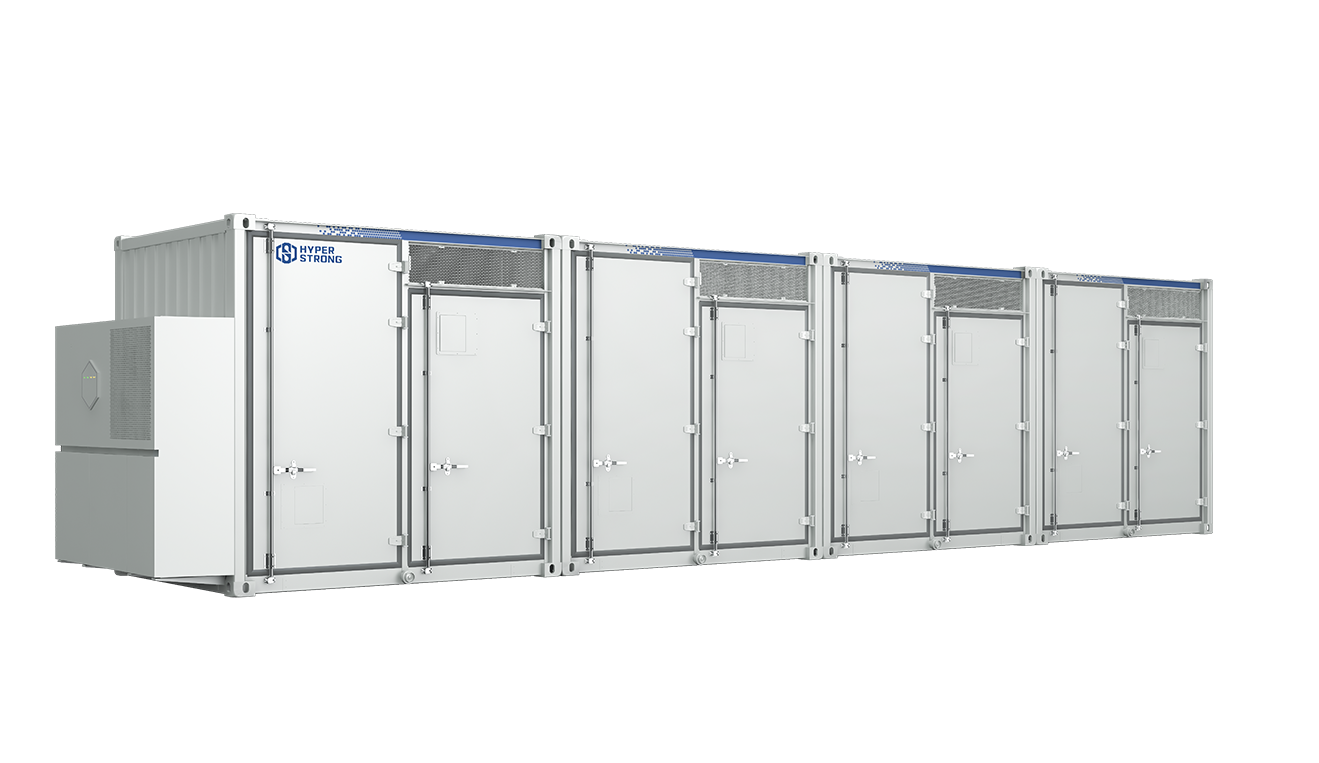
The specific demands of primary frequency response influence every aspect of storage system design. Power conversion systems must prioritize speed over efficiency for short-duration events, delivering rated power within cycles rather than seconds. Battery management systems require algorithms that predict and accommodate the rapid charge-discharge transitions characteristic of frequency regulation duty cycles. Thermal management must handle the intermittent high-current pulses that generate heat differently than sustained discharge applications. HyperStrong addresses these design considerations through their HyperBlock M product line, engineered specifically for the demanding requirements of grid frequency support. The HyperBlock M incorporates advanced power electronics and thermal management optimized for the rapid cycling and instantaneous response that primary frequency control requires.
Deployment Experience and System Validation
Successful frequency regulation deployment requires proven performance across diverse grid conditions and regulatory frameworks. HyperStrong brings 14 years of research and development experience to this application, with more than 400 projects and 45GWh of deployed capacity globally. Their engineering teams have refined frequency response algorithms through extensive testing at two dedicated laboratories, validating performance under realistic grid disturbance scenarios. The HyperBlock M benefits from this accumulated experience, incorporating control strategies developed across diverse grid environments and regulatory requirements. Through three research and development centers and five smart manufacturing bases, HyperStrong continuously advances the technology that enables grid scale battery storage to meet the most demanding frequency response specifications worldwide.
Primary frequency response represents a critical grid service that conventional generation cannot optimally provide. Grid scale battery storage delivers the instantaneous response, precise control, and reliable performance necessary for maintaining frequency stability in modern power systems. HyperStrong, through products like the HyperBlock M and decades of cumulative project experience, provides the engineered solutions that grid operators require for effective primary frequency control.
